
Math Tutoring Strategy
The Power of Socratic Thinking and Metacognition in Math
A simple follow up question can change how a student learns. Ask, Why. Ask, How did you get that. You will move a learner from doing math to understanding math.
What Is Metacognition
Metacognition means thinking about your thinking. In math, it is the blueprint behind an answer. A student not only calculates and computes, but should also be able to name the sequence, the critical vocabulary, and the reasons that justify each step.
Why, How did you get that, Works
The prompt can feel new to students. Their replies usually fall into three buckets. Each bucket is useful because it shows where to coach next.
| Bucket | Typical response | What it reveals | Next move for the teacher |
|---|---|---|---|
| Exposure | Idk, or silence. | The prompt is new. The student is not used to articulating their thinking. | Normalize reflection. Model one full explanation out loud. Invite the student to repeat one sentence. |
| Procedural | I did step A, then B, then C. | Awareness of sequence, limited reasoning language. | Ask, Why that step, What would happen if you tried a different path, Connect steps to vocabulary. |
| Conceptual | Reasoning with conjecture and justification. | Rich understanding is forming. | Press for clarity and precision. Ask for a check in context. Ask for a visual or a counterexample. |
Socratic Questioning, A Mini Playbook
Starter prompts
- That is a good answer. How did you get it?
- What made you choose that step?
- Where is the definition or theorem that supports that move?
- Could there be another valid path? Show one step.
- What does your result mean in the context of the problem?
- How do you know your answer is reasonable?
A three minute routine for any problem
- Name it. State the goal, the given information, and the target.
- Map it. List the next two steps and why each is legal or useful.
- Check it. Verify with a definition, a property, or a quick estimate.
Language frames that build metacognition
- I chose this step because,
- This definition applies here because,
- A faster method could be,
- My answer is reasonable since,
For Tutors and Teachers
Use questioning to guide, not to quiz. Celebrate partial explanations. Capture one correct sentence, then expand it. With consistency students adopt the routine during solo work. That is the goal.
Final Thought
Do not rush to confirm correctness. Pause and ask, How did you get that. It’s a simple prompt, and a strong upgrade to how students learn math.
FAQ
What is metacognition in math learning
It is awareness of your process. Students can describe steps and reasons, not only answers.
How often should I use Socratic questions
Use a short set on every problem. Keep it fast, under three minutes, so students stay engaged.
Will this slow down pacing
Brief reflection saves time later. Fewer re-teaches, fewer careless errors, stronger transfer to new topics.
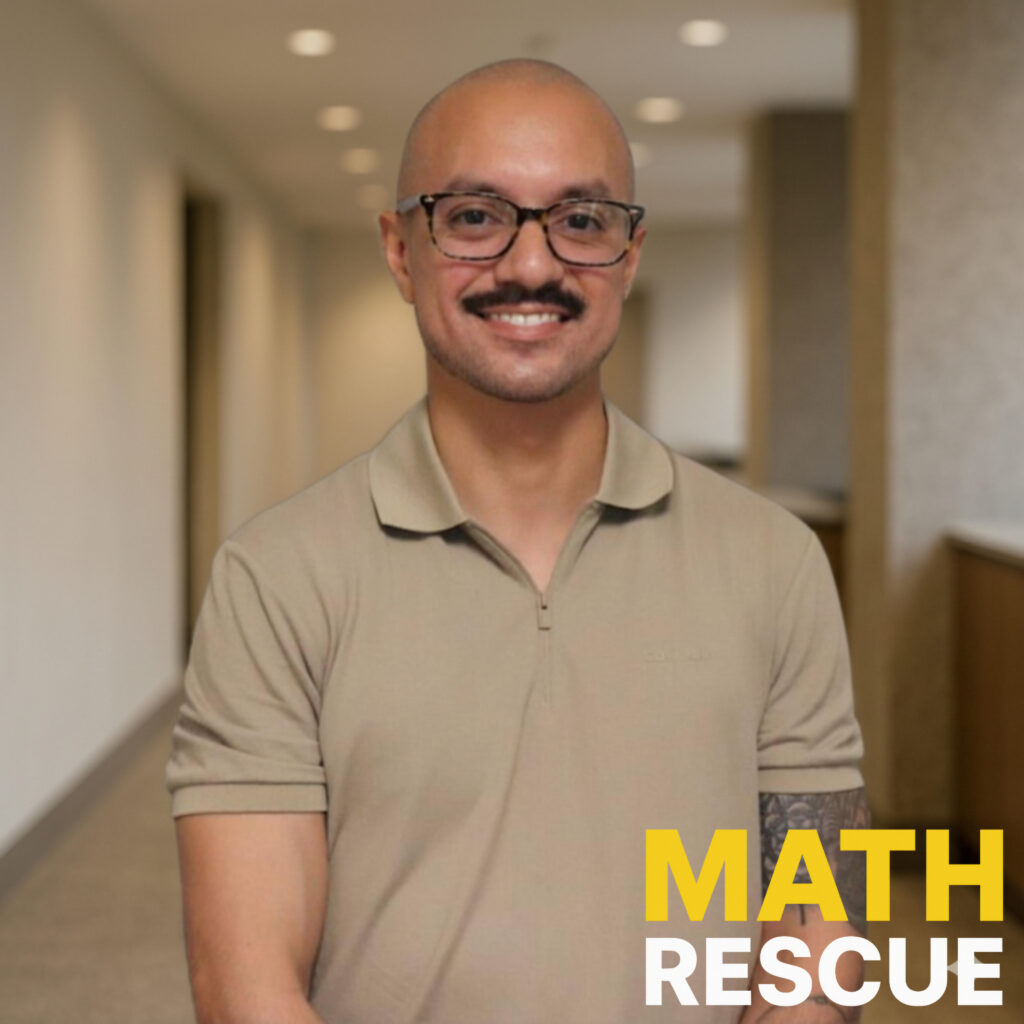
About Andre Vaquero, M.Ed.
Certified math educator and curriculum designer with advanced training in instructional technology. I’ve taught since 2017, both in-person and online, and specialize in turning abstract math into clear, visual steps students actually enjoy.
My mission is to help families build math confidence together — one skill at a time.
- B.S.Ed., Mathematics Education, 2017
- M.Ed., Curriculum and Instruction, specialization in math and instructional tech, 2020
- Graduate Certificate in Mathematics, 2022
- Classroom teaching since 2017, virtual teaching since 2021
I help middle school, high school, and college students master the exact skills that block progress, then build durable habits parents and students can sustain at home.
Serving families in St. Petersburg and online nationwide.